Learn
How Much CBD Should I Take? The UK FSA 10mg Guidance Explained
The Food Standards Agency advises healthy adults to take no more than 10mg of CBD a day. This guide explains what that means, how to read a label against it, and why some products contain more.

The only official UK figure for how much CBD to take is the Food Standards Agency's advice that healthy adults should not consume more than 10mg of CBD a day from food. That covers oils, capsules, gummies and anything else you eat or drink. Nobody can give you a personal dose, and this guide does not try to. What it does is show you how to read a pack against the FSA's number, so the choice you make is an informed one.
Key takeaways
- The FSA advises healthy adults to take no more than 10mg of CBD a day. It is precautionary advice, not a legal limit.
- The figure is a daily total across every CBD food you take, so oils, capsules and gummies all count towards it.
- The big number on a bottle is the total CBD in the whole bottle, not a serving. Work out the amount per serving before you compare products.
- Some products on the UK market, including some of ours, contain more than 10mg per piece or per serving. Check the label every time.
- The FSA advises against CBD foods for children, people who are pregnant, breastfeeding or trying to conceive, and people taking medication who have not spoken to a medical professional.
What the FSA actually says
In October 2023 the FSA, together with Food Standards Scotland, updated its consumer advice on CBD. Healthy adults should limit CBD from food to 10mg a day, which the FSA describes as about four to five drops of a 5% CBD oil. The advice it replaced, from February 2020, was 70mg a day. You can read the announcement on the FSA website.
The FSA is clear that this is precautionary. Its reasoning is about long-term exposure rather than a single day. It says the level of risk is related to how much you take and how often, with the liver and thyroid the areas of concern, and that there is no acute safety risk from having more than 10mg on a given day. It also asked shoppers to check product labels and keep track of their own daily intake.
Two details matter when you apply the number:
- It is for healthy adults. The groups the FSA advises against are covered below.
- It is about CBD as a food. That means oils, capsules, gummies, drinks and baking. A skin balm is a cosmetic and is covered by different rules.
Why the numbers on the pack look so big
A bottle of CBD oil might say 1500mg on the front while the FSA figure is 10mg. Both are correct, because they measure different things. The number on the front of an oil is the total CBD in the whole bottle. Capsules and gummies are labelled differently: the headline figure is usually the amount in each piece, with the pack total shown separately.
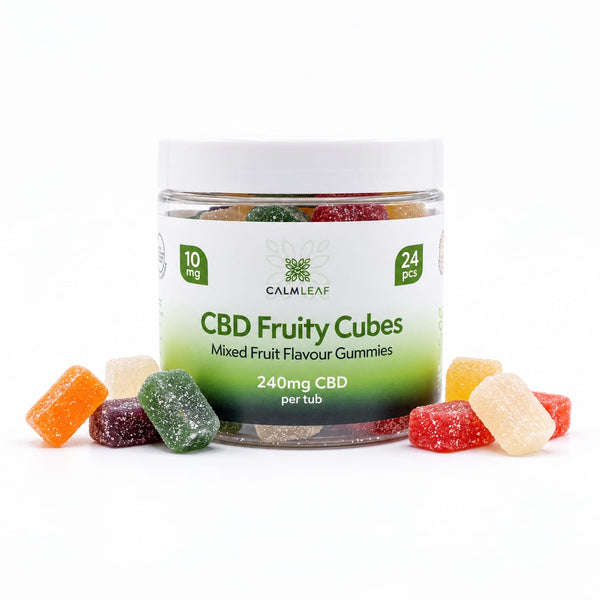
Take two Calm Leaf examples. The 1500mg oil holds 1500mg of CBD in a 30ml bottle. That is around 600 drops at the roughly 2.5mg per drop listed on its product page, so each drop contains only a few milligrams. A tub of 10mg Fruit Cubes is different. The label gives the amount per cube, so one piece is the whole FSA figure on its own.
How to work out CBD per serving
Oils
- Find the total CBD (for example 1500mg) and the bottle size in millilitres (30ml).
- Divide the total by the bottle size: 1500 ÷ 30 = 50mg per ml. That is a 5% oil.
- Divide by the number of drops in a millilitre. Droppers vary, and about 20 drops to the millilitre is a common figure that fits the FSA's own example. 50 ÷ 20 = 2.5mg per drop.
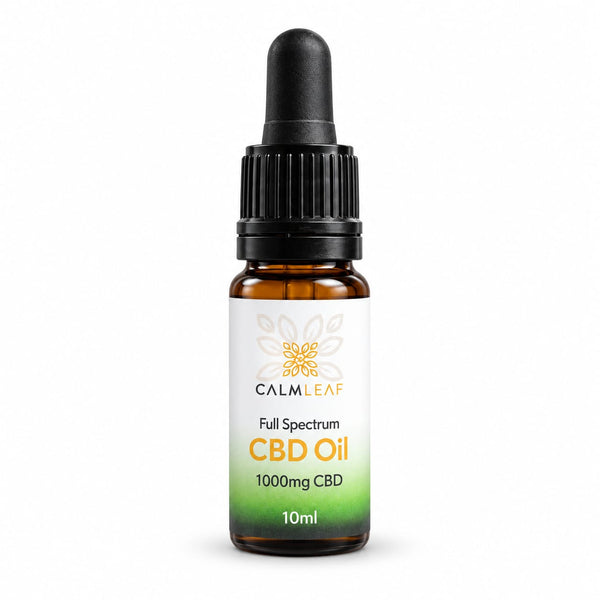
Where a product page or label prints a per-drop figure, use that instead of estimating. To see what the FSA figure looks like in practice: at 2.5mg a drop, 10mg is four drops, which matches the FSA's example. At around 5mg a drop, which is what the 3000mg oil lists, it is two drops. At around 1.7mg a drop, as listed for the 1000mg oil, it is about six. That is label arithmetic, not a dose plan.
Capsules and gummies
The label shows milligrams per piece, so you multiply by the number of pieces. A 30mg capsule is three times the FSA figure in a single piece. A 10mg Fruit Cube is exactly the figure.
The FSA figure is a daily total. If you use an oil in the morning and a gummy in the evening, add the two together. Our guide to CBD oil strengths shows how to compare oils in more detail.
What 10mg looks like across the Calm Leaf range
| Product | CBD per piece or concentration | Compared with 10mg |
|---|---|---|
| 10mg Fruit Cubes | 10mg per cube | One cube matches the FSA figure |
| 25mg Cherries gummies | 25mg per gummy | 2.5 times the figure per gummy |
| 50mg Strawberries gummies | 50mg per gummy | 5 times the figure per gummy |
| CBD Capsules 30mg | 30mg per capsule | 3 times the figure per capsule |
| CBD Capsules 60mg | 60mg per capsule | 6 times the figure per capsule |
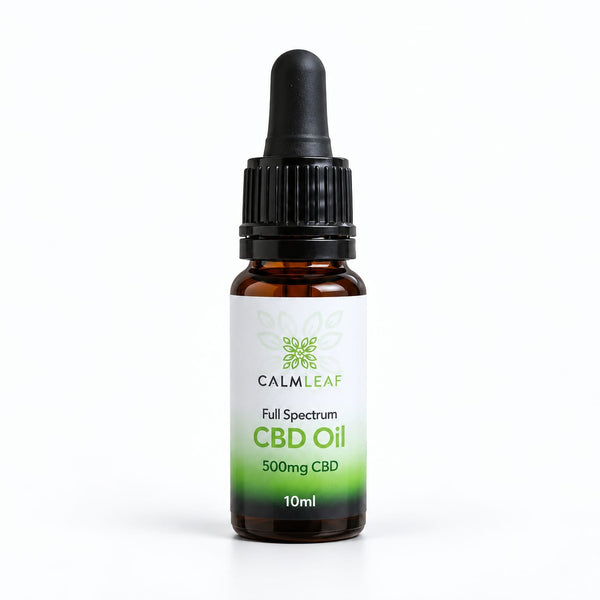
| CBD Oil 500mg and 1500mg | 5% oil, 50mg per ml | The strength the FSA used in its example of four to five drops |
| CBD Oil 1000mg | 3.3% oil, about 33mg per ml | You count the drops |
| CBD Oil 3000mg | 10% oil, 100mg per ml | You count the drops |
Our regulatory compliance page is upfront that some Calm Leaf products contain more than 10mg per piece or serving, and that you should read the pack and follow its directions. If you want to stay close to the FSA figure, the 10mg Fruit Cubes and the oils, where you control the number of drops, are the formats that make it easiest to count.
Prices correct on 29 October 2026. Free UK delivery on orders over £49. Browse the full oils, gummies and capsules ranges.
Who should avoid CBD foods
The FSA continues to advise that CBD foods are not taken by people in vulnerable groups. That includes:
- children
- people who are pregnant or breastfeeding
- people who are trying to conceive
- people taking medication, unless they have consulted a medical professional first
If you take prescription medication, speak to your GP or pharmacist before you use any CBD food. Our products are for adults aged 18 and over.
Why we do not give a personal dose
UK rules do not allow CBD food supplements to be sold on medical or health claims, and we are not a medical service. So we will not tell you how many drops or pieces are right for you, and you should be wary of any retailer that does. What a retailer can do is print clear strengths on the pack, supply the lab report for your batch, and point you to the regulator's advice. We do all three. Our guide to lab testing and COAs explains how to read the report, and our CBD oil buying guide covers the other checks worth making before you buy.
Where the rules are heading
CBD foods are classed as novel foods in Great Britain, which means they need authorisation before they can be sold legally. As of the FSA's September 2026 board paper, no CBD food had been authorised. In the meantime the FSA runs an interim Public List of products linked to applications that are going through the process. Being on the list is not the same as being authorised.
In that September 2026 paper the FSA recommended that ministers in England and Wales authorise the first three CBD novel food applications. All three are high-purity (98% or above) CBD ingredients intended for food supplements. The final decision sits with ministers, so read the FSA paper and check the FSA website for the latest position. We will update this guide when it changes.
Frequently asked questions
How much CBD can I take a day in the UK?
The FSA advises healthy adults to take no more than 10mg of CBD a day from food. This is the only official UK figure, and it applies to all CBD foods combined.
Is the 10mg figure a legal limit?
No. It is precautionary consumer advice from the FSA. Separate rules cover how CBD foods are authorised and how much THC a product can contain.
How many drops of CBD oil is 10mg?
It depends on the strength of the oil. The FSA's own example is four to five drops of a 5% oil. Divide the total CBD by the bottle size, then by the drops per millilitre, or use the per-drop figure on the product page.
Do CBD gummies and capsules count towards the 10mg?
Yes. The figure is a daily total across every CBD food you take, so add up oils, capsules, gummies and any CBD drinks or baking.
Why do some products contain more than 10mg per serving?
The FSA has acknowledged that some products on the market contain more than 10mg per serving and has asked shoppers to check labels. Read the pack and follow its directions. Our regulatory compliance page explains how we handle this.
Can I take CBD with medication?
The FSA advises people taking medication not to use CBD foods unless they have consulted a medical professional. Speak to your GP or pharmacist first.
Sources and further reading
- Food Standards Agency: updated consumer advice for CBD (October 2023)
- Food Standards Agency: CBD Public List
- Food Standards Agency: CBD novel food applications, recommendations to ministers (September 2026)
Related Calm Leaf guides
- CBD Oil Strengths Compared: 500mg vs 1000mg vs 1500mg vs 3000mg
- CBD Lab Testing and COAs Explained
- How to Choose the Best CBD Oil in the UK: A 2026 Buying Guide
- Is CBD Legal in the UK? THC Limits and the Rules Explained
Last reviewed: 29 October 2026. General information only, not medical advice. Calm Leaf CBD food supplements and cosmetics are not medicines and are not intended to diagnose, treat, cure or prevent any disease. For adults aged 18 and over.
Related reading
-
 Learn
CBD and Alcohol: Can You Mix Them?
There is no specific UK guidance on combining CBD with alcohol. Here is what the FSA and NHS say about each, and the practical checks that follow.
6 min read -
 Learn
CBD and Driving in the UK: What the Law Says
UK drug driving law sets a THC limit of 2 micrograms per litre of blood and has a separate unfit-to-drive offence. Here is how both relate to CBD products.
6 min read -
 Learn
Will CBD Show Up on a Drug Test in the UK?
Workplace cannabis tests look for THC, and CBD products can contain traces of it. Here is what the tests detect, what employer guidance says, and what to check before you buy.
6 min read